Can You Understand Real Korean? 🇰🇷
한국 카페에서 실제로 듣는 한국어 표현 ☕️
Have you ever studied Korean for a long time, but suddenly couldn't understand what a Korean staff member was saying?
한국어를 꽤 오래 공부했는데도 한국 카페나 식당에서 직원이 하는 말을 순간적으로 알아듣지 못했던 적이 있나요?
This happens because the Korean you hear in real life can sound quite different from the complete sentences you learn in textbooks.
그 이유는 실제 생활에서 듣는 한국어가 교재에서 배우는 완성된 문장과 조금 다르게 들릴 수 있기 때문이에요.
Today, let's listen to a real conversation at a café in Korea and learn some useful expressions that Koreans actually use.
오늘은 한국 카페에서 실제로 나눈 대화를 통해 한국 사람들이 정말 사용하는 표현들을 배워볼게요. ☕️🇰🇷
☕ A Real Café Conversation in Korea
Here are some of the expressions you can hear in the video.
영상에서 실제로 들을 수 있는 표현들이에요.
A: 더블?
Double?
B: 더블 좋아요~
Double sounds good!
A: 바닐라 라떼, 아이스로~
An iced vanilla latte, please.
Staff: 아이스요~
Iced?
Staff: 드시고 가시나요?
Are you having it here?
A: 네, 먹고 가요.
Yes, for here.
Staff: 적립 있으세요?
Do you have a rewards account?
Staff: 포인트 사용 도와드릴까요?
Would you like to use your points?
A: 네, 해주세요.
Yes, please.
Staff: 이번 거는 적립 안 되세요.
You won't earn points on this purchase.
Staff: QR 찍어주세요.
Please scan the QR code.
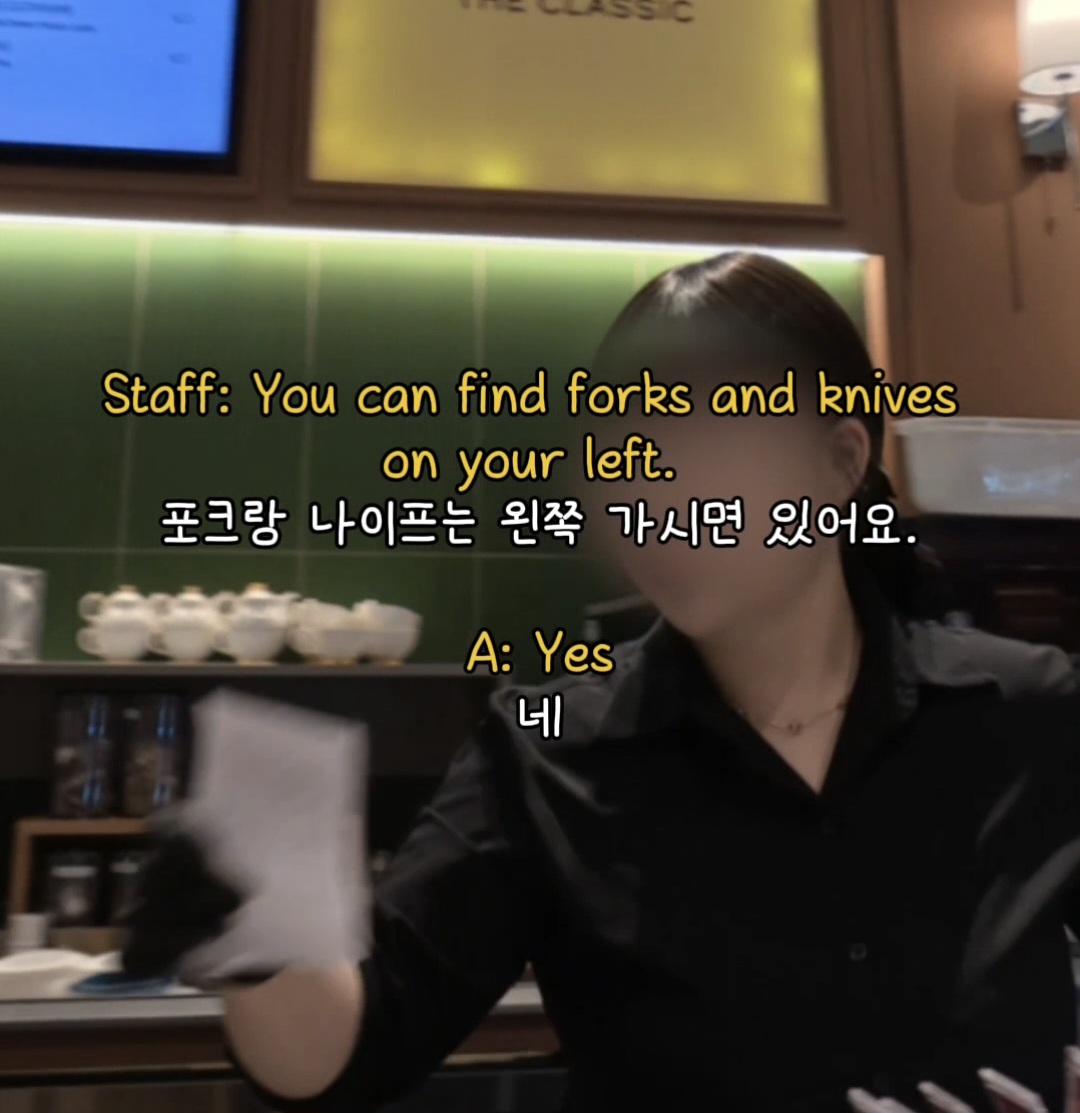
Staff: 포크랑 나이프는 왼쪽 가시면 있어요.
You can find forks and knives on your left.
Did you understand everything?
모두 알아들을 수 있었나요? 😊
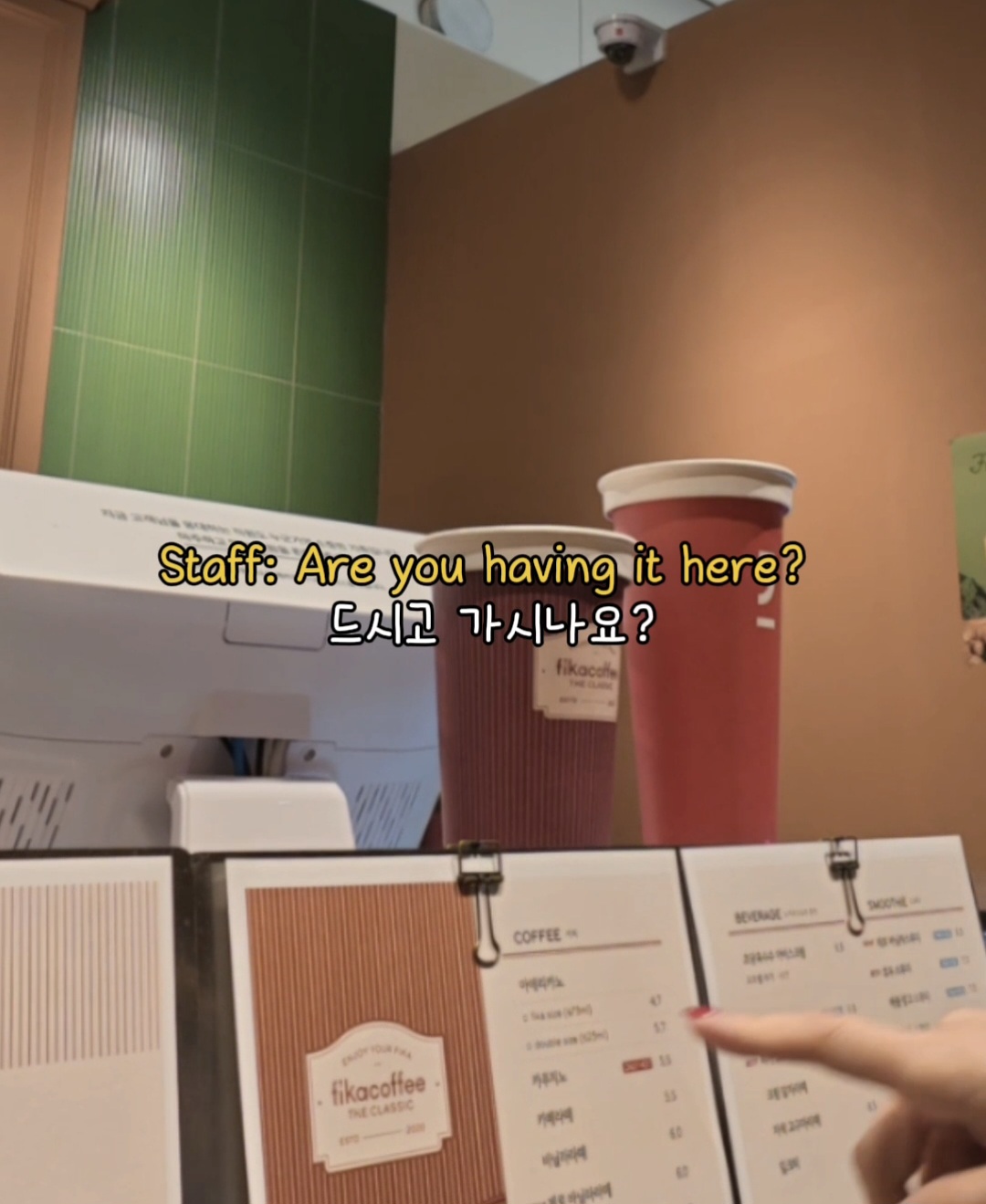
1. 드시고 가시나요?
드시고 가시나요?
= Are you having it here?
The verb 드시다 is the honorific form of 먹다, which means "to eat."
드시다는 먹다의 높임말이에요.
먹다 → to eat
드시다 → honorific form of "to eat"
In Korea, café and restaurant staff usually speak politely to customers, so you'll often hear 드시다 instead of 먹다.
한국에서는 카페나 식당 직원이 손님에게 높임말을 사용하기 때문에 먹다 대신 드시다라는 표현을 자주 들을 수 있어요.
For example:
여기서 드시고 가시나요?
Are you eating here?
드시고 가실 거예요?
Will you be eating here?
But notice how the customer answers:
네, 먹고 가요.
Yes, I'll eat here.
The customer doesn't need to use 드시다 about themselves. 드시다 is used to show respect to the person doing the eating.
여기서 재미있는 점은 손님은 자신의 행동을 말할 때 드시다를 사용하지 않는다는 거예요. 드시다는 상대방의 행동을 높여 말하는 표현이기 때문이에요.
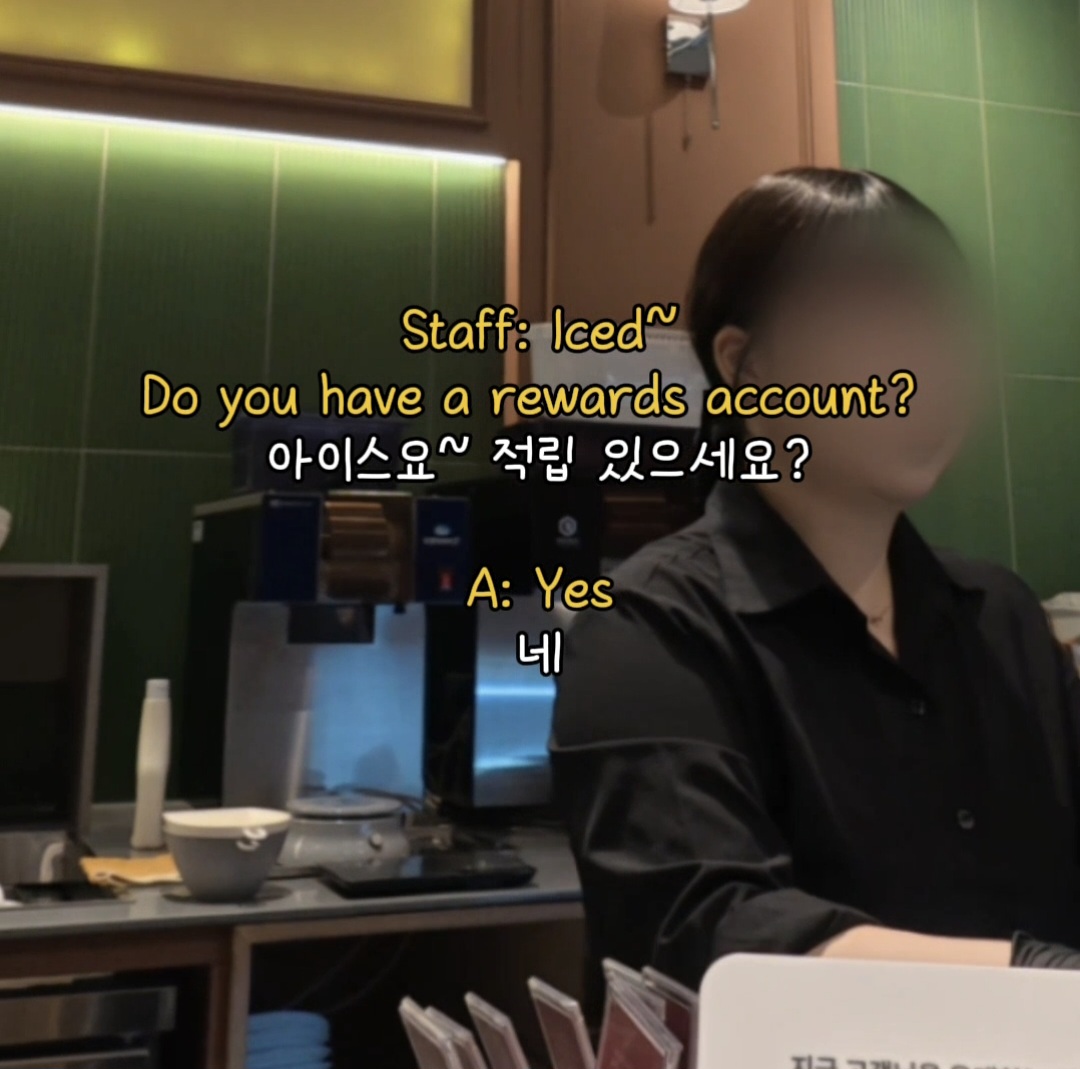
2. 적립 있으세요?
적립 있으세요?
= Do you have a rewards account?
적립하다 means to collect or earn something, such as points or rewards.
적립하다는 포인트나 마일리지 등을 모은다는 뜻이에요.
포인트를 적립하다
= to earn points
A more complete sentence might be:
포인트 적립하시나요?
Would you like to earn points?
But in real cafés and stores, Koreans often shorten sentences when the meaning is obvious from the situation.
하지만 실제 한국의 카페나 매장에서는 상황만으로 의미를 알 수 있기 때문에 문장을 짧게 말하는 경우가 많아요.
So you may simply hear:
적립 있으세요?
This is a great example of the difference between textbook Korean and real-life Korean.
바로 이런 표현이 교재 속 한국어와 실제 한국어의 차이를 보여주는 좋은 예예요.
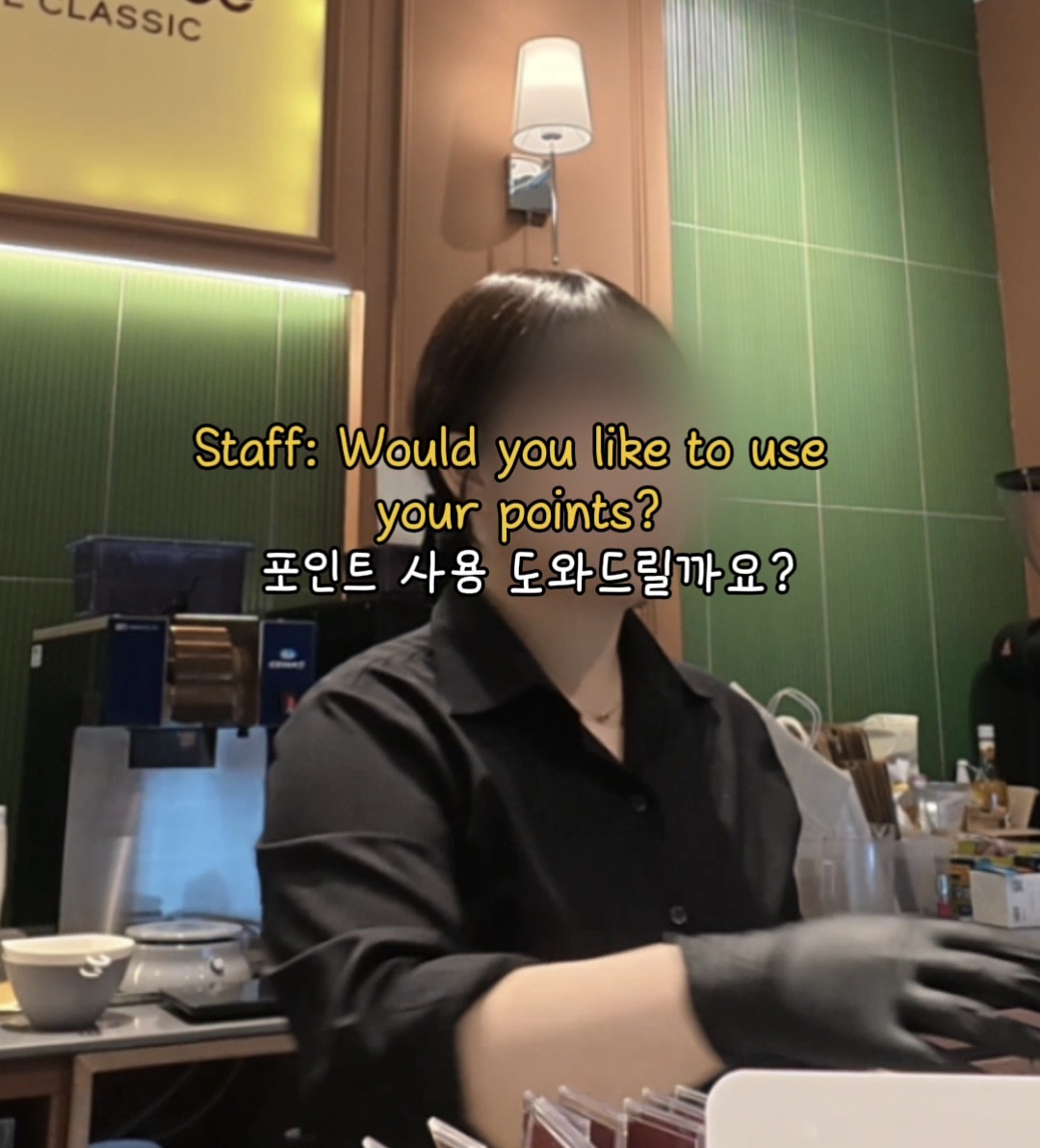
3. 포인트 사용 도와드릴까요?
포인트 사용 도와드릴까요?
= Would you like to use your points?
Here, let's pay attention to:
~아/어 드릴까요?
This expression is used when you politely offer to do something for another person.
이 표현은 상대방을 위해 어떤 행동을 해줄지 정중하게 물을 때 사용해요.
You will hear it very often in Korean stores, cafés, restaurants, hotels, and other service situations.
한국의 카페, 식당, 매장, 호텔 등에서 정말 자주 들을 수 있는 표현이에요.
For example:
도와드릴까요?
Shall I help you?
찾아드릴까요?
Shall I find it for you?
포장해 드릴까요?
Shall I pack it for you?
확인해 드릴까요?
Shall I check it for you?
If you're visiting Korea, ~아/어 드릴까요? is definitely a pattern worth remembering.
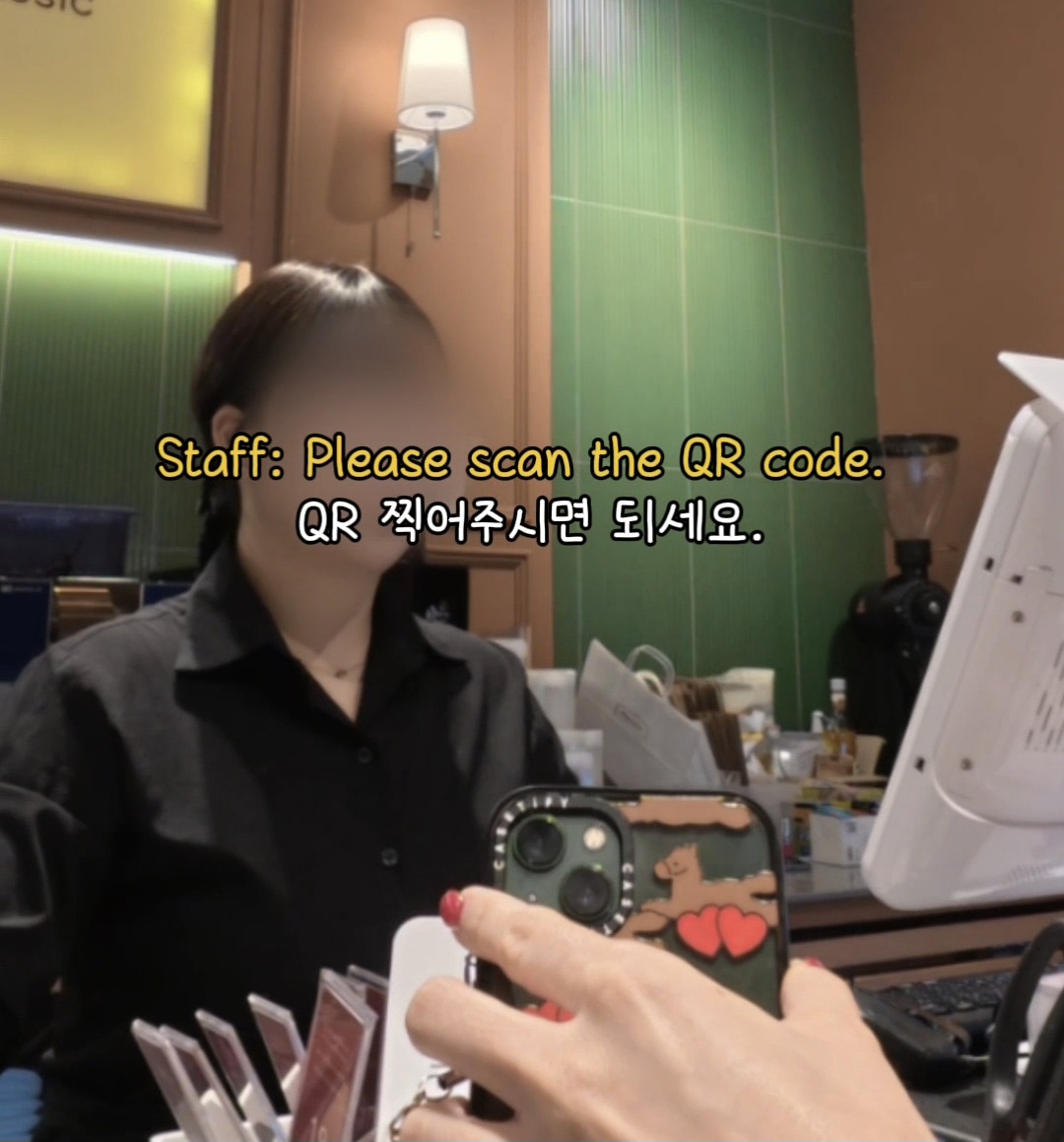
4. QR 찍어주세요
QR 찍어주세요.
= Please scan the QR code.
This sentence is interesting because of the verb 찍다.
찍다 is commonly used to mean "to take a photo."
사진을 찍다
= to take a photo
But in everyday Korean, 찍다 is used in many situations depending on context.
그런데 실제 한국어에서 찍다는 상황에 따라 아주 다양하게 사용돼요.
사진 찍어주세요.
Please take a photo.
카드 찍어주세요.
Please tap your card.
QR 찍어주세요.
Please scan the QR code.
You don't always need to translate 찍다 literally. Pay attention to the situation and context.
그래서 찍다를 항상 하나의 영어 단어로 외우기보다는 어떤 상황에서 사용되는지 함께 익히는 것이 좋아요.
5. 왼쪽 가시면 있어요
포크랑 나이프는 왼쪽 가시면 있어요.
= You can find forks and knives on your left.
Here, the useful grammar pattern is:
~(으)시면
This comes from:
~(으)면 = if / when
and adds an honorific element with 시.
가면
= if/when you go
가시면
= if/when you go (honorific/polite)
Because the staff member is speaking to a customer, 가시면 sounds more polite and respectful than simply saying 가면.
직원이 손님에게 안내하고 있기 때문에 가면보다 높임의 시가 들어간 가시면을 사용한 거예요.
You may hear similar expressions in Korea:
오른쪽으로 가시면 있어요.
You'll find it if you go to the right.
2층으로 올라가시면 돼요.
You can go up to the second floor.
조금만 기다리시면 돼요.
You just need to wait a little.
This is another very useful pattern to recognize when traveling or living in Korea.
💡 Why does real Korean sound so different?
One important thing you can learn from this café conversation is that Koreans don't always speak in complete textbook sentences.
이번 카페 대화에서 꼭 기억했으면 하는 점이 하나 있어요. 한국 사람들은 실제 대화에서 항상 교재처럼 완성된 문장으로 말하지 않는다는 거예요.
For example:
바닐라 라떼 하나 아이스로 주세요.
This is grammatically complete and perfectly natural.
하지만 실제 주문에서는 이렇게 말할 수도 있어요.
바닐라 라떼, 아이스로~
Or simply:
아이스로요~
The rest of the sentence is understood from context, so Koreans often leave it out.
이미 서로 어떤 이야기를 하고 있는지 알고 있기 때문에 뒤에 오는 말을 생략해도 충분히 의미가 전달되는 거예요.
That's why learning grammar is important, but listening to real Korean conversations is just as important.
그래서 한국어 문법을 공부하는 것도 중요하지만 한국 사람들이 실제로 어떻게 말하는지 많이 들어보는 것도 정말 중요해요.
📝 Today's Real Korean
☕ 드시고 가시나요?
→ 드시다 = honorific form of 먹다
💳 적립 있으세요?
→ 적립하다 = to earn / collect points
💰 ~아/어 드릴까요?
→ politely offering to do something for someone
📱 QR 찍어주세요.
→ 찍다 can have different meanings depending on context
🍴 왼쪽 가시면 있어요.
→ ~(으)시면 = honorific form of ~(으)면
How much did you understand? 👀
If you visit a café in Korea, listen carefully for these expressions.
한국 카페에 방문하게 된다면 오늘 배운 표현들이 실제로 들리는지 한번 귀 기울여 들어보세요. ☕️
You might be surprised by how much Korean you can understand!
생각보다 많은 한국어가 들리기 시작할지도 몰라요. 😊
Learn Korean from real life in Korea with Sunny 🇰🇷
교재에서만 배우는 한국어가 아니라
한국의 일상 속에서 실제로 사용하는 한국어를 함께 배워봐요!
'🗣️ Real Korean' 카테고리의 다른 글
| Korean Convenience Store Conversation 🇰🇷 | Learn Real Korean with a Mom & Daughter (0) | 2026.09.04 |
|---|---|
| My Dog Looks Like a Mop 😂|한국 애견미용실에서 듣는 진짜 한국어 (0) | 2026.08.28 |

