# Why Do Koreans Trail Off? 🇰🇷 Learn ~는데요 in Real Korean
Have you ever listened to Koreans talking and thought,
“Wait… did they finish the sentence?” 🤔
한국인들이 대화하는 걸 듣다가
“어? 말이 아직 안 끝난 건가?”
하고 생각한 적 있나요?
Koreans often use sentence endings that sound like there should be something more coming.
One of the most common ones is ~는데요.
한국어에는 뒤에 무언가 더 말할 것처럼 들리는 문장 끝 표현이 많아요.
그중 실제 대화에서 정말 자주 사용하는 표현이 바로 **‘~는데요’**예요.
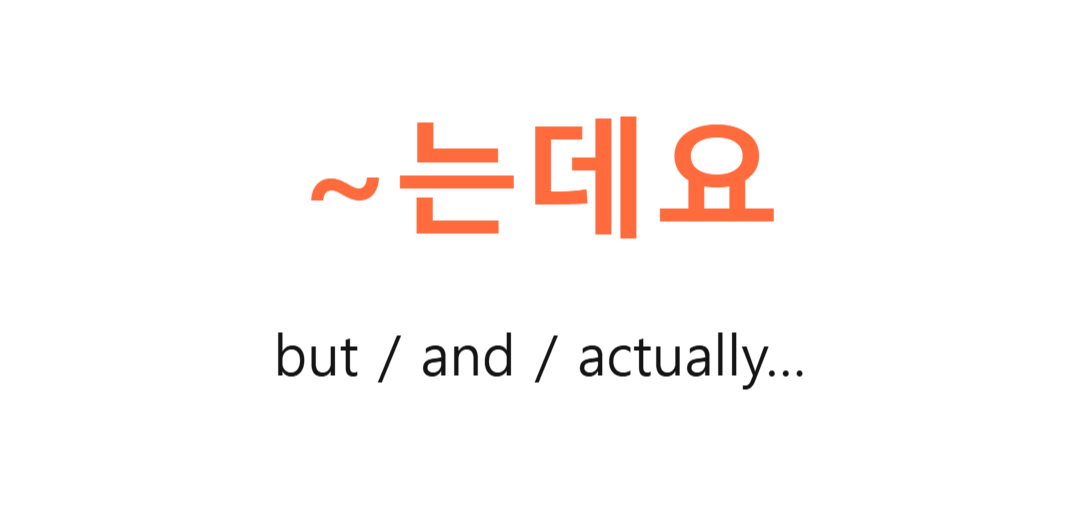
🇰🇷 What does ~는데요 mean?
If you study Korean with a textbook, you may see **~는데요** translated as **“but.”**
But in real Korean conversations, it doesn’t always mean “but.”
한국어 교재에서는 ‘~는데요’를 ‘but(하지만)’ 정도로 배우는 경우가 있어요.
하지만 실제 한국인의 대화에서는 꼭 ‘하지만’이라는 뜻으로만 사용하는 것은 아니에요.
Depending on the situation, ~는데요 can:
* give background information
* set up what you want to say next
* lead naturally into a question
* make your sentence sound softer
상황에 따라 ‘~는데요’는
* 상황이나 배경을 설명하거나
* 다음 말을 자연스럽게 이어주거나
* 질문하기 전에 상황을 제시하거나
* 말투를 조금 더 부드럽게 만들어줘요.
That’s why translating ~는데요 with just one English word can be difficult.
그래서 ‘~는데요’는 영어 단어 하나로 딱 번역하기 어려운 한국어 표현 중 하나예요.

💬 Example 1. 오늘 좀 바쁜데요, 내일 만날까요?
오늘 좀 바쁜데요, 내일 만날까요?
o-neul jom ba-ppeun-de-yo, nae-il man-nal-kka-yo?
I’m a bit busy today — how about meeting tomorrow?
Here, 바쁜데요 gives the listener some background before the speaker makes a suggestion.
Instead of saying two completely separate sentences,
오늘 좀 바빠요. 내일 만날까요?
using ~는데요 makes the conversation flow more naturally.
여기서 ‘바쁜데요’는 상대방에게 먼저 상황을 설명하고, 그다음 제안을 자연스럽게 이어주는 역할을 해요.
오늘 좀 바빠요. 내일 만날까요?
라고 두 문장으로 말할 수도 있지만,
오늘 좀 바쁜데요, 내일 만날까요?
라고 하면 대화의 흐름이 조금 더 자연스러워져요.
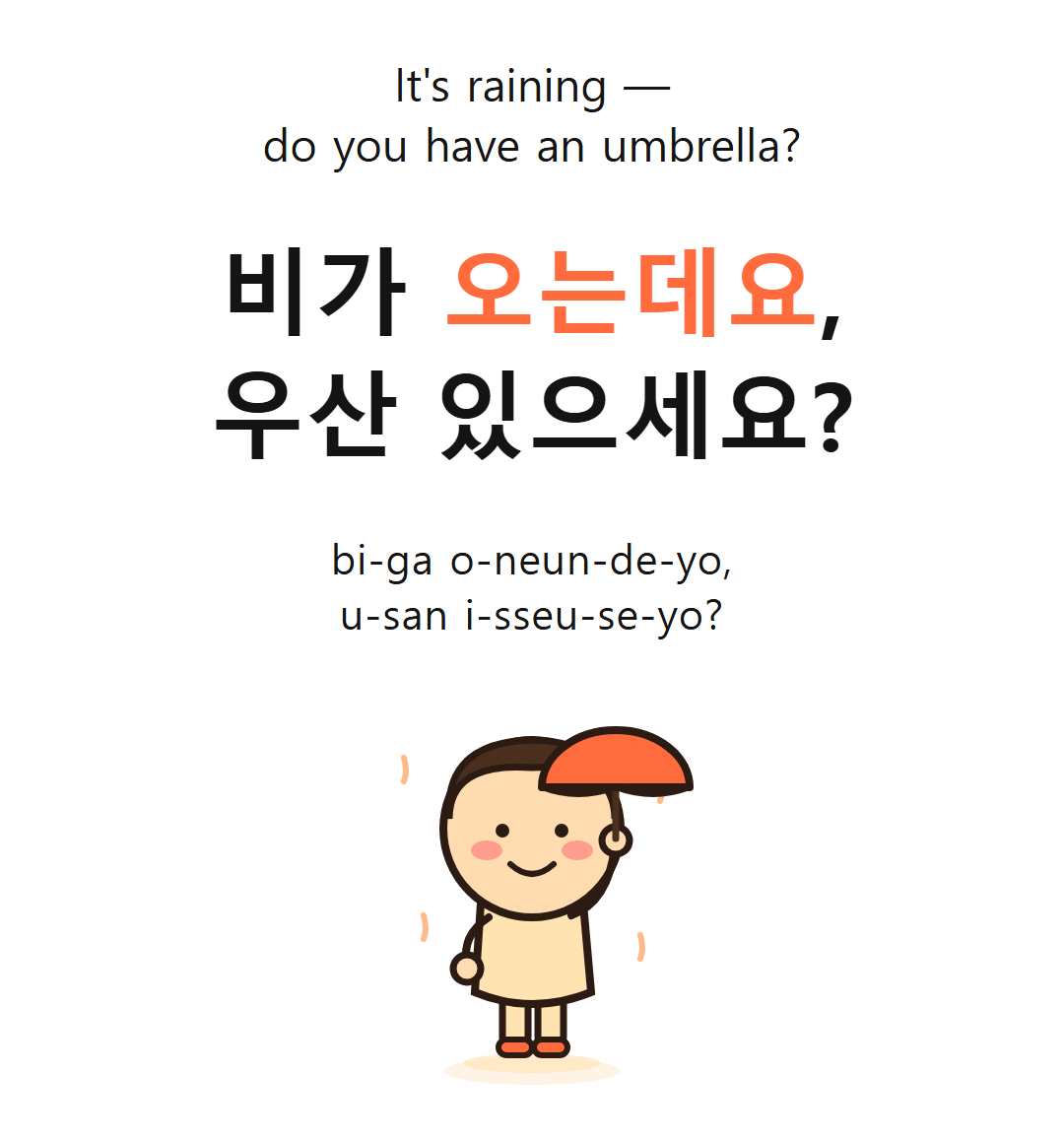
☔ Example 2. 비가 오는데요, 우산 있으세요?
비가 오는데요, 우산 있으세요?
bi-ga o-neun-de-yo, u-san i-sseu-se-yo?
It’s raining — do you have an umbrella?
The speaker first mentions the situation — “It’s raining” — and then asks the question.
Here, translating ~는데요 as “but” would sound strange.
먼저 ‘비가 온다’는 상황을 이야기한 뒤
‘우산 있으세요?’라는 질문으로 자연스럽게 연결하고 있어요.
이 문장에서 ‘~는데요’를 무조건 ‘하지만’이라고 해석하면 어색하겠죠?
이런 점 때문에 한국어를 배울 때는 단어의 뜻만 외우기보다 실제 문장 속에서 표현을 익히는 것이 중요해요.
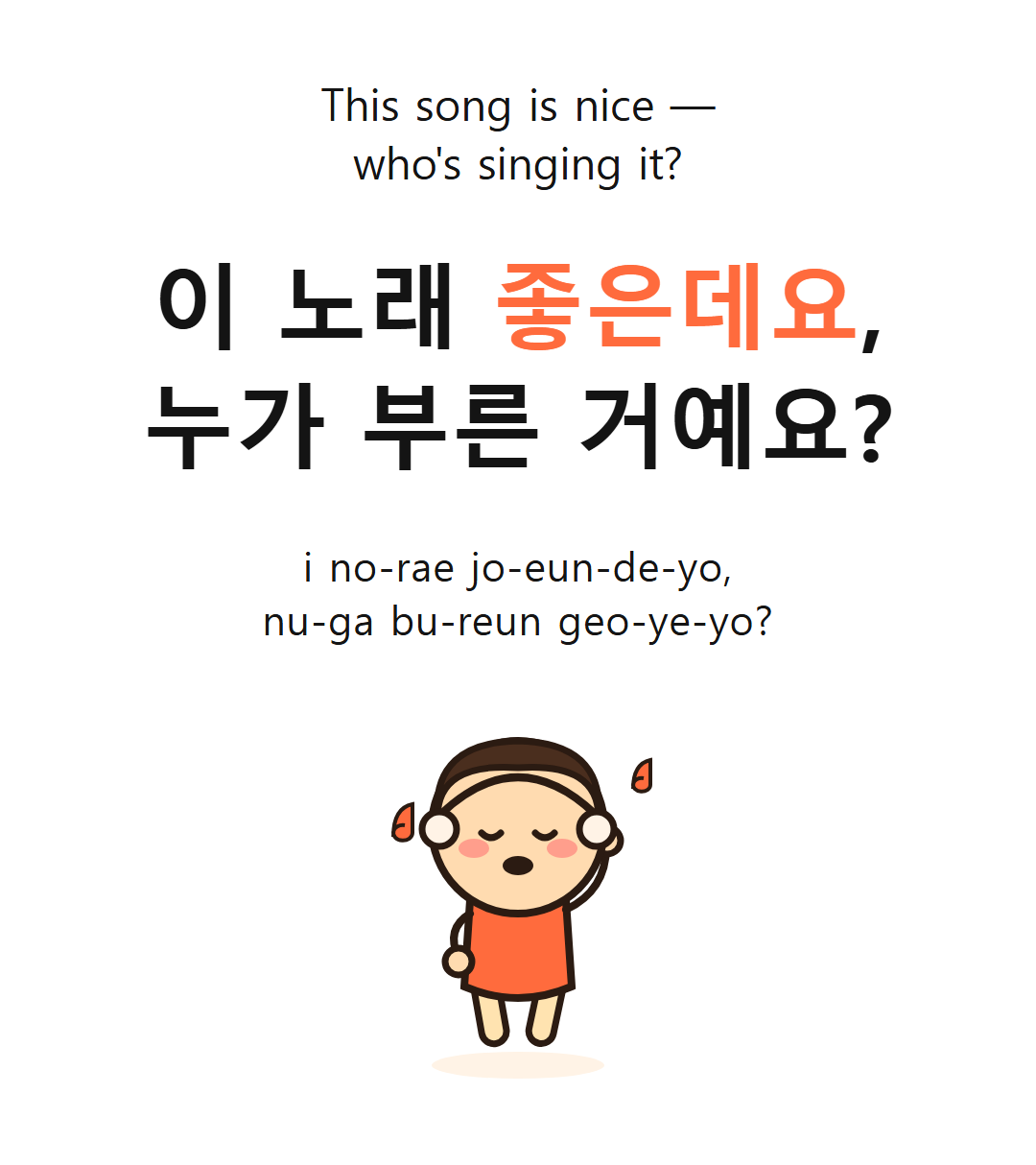
🎵 Example 3. 이 노래 좋은데요, 누가 부른 거예요?
이 노래 좋은데요, 누가 부른 거예요?
i no-rae jo-eun-de-yo, nu-ga bu-reun geo-ye-yo?
This song is nice — who sings it?
Here, the speaker gives a reaction first:
“This song is nice.”
Then naturally continues with a question:
“Who sings it?”
여기서는 먼저
“이 노래 좋네요.”
라는 느낌을 전달한 다음,
“누가 부른 거예요?”
라고 궁금한 점을 자연스럽게 이어서 묻고 있어요.
실제 한국인들의 일상 대화에서 이런 식의 ‘~는데요’를 정말 많이 들을 수 있어요.
✨ Why does ~는데요 sometimes sound unfinished?
This is the interesting part.
Sometimes Koreans actually end the sentence with ~는데요 and don’t say anything after it.
재미있는 부분은 여기예요.
한국인들은 때때로 ‘~는데요’ 뒤에 아무 말도 하지 않고 문장을 끝내기도 해요.
For example:
A: 지금 잠깐 만날 수 있어요?
Can we meet for a moment now?
B: 지금 좀 바쁜데요…
I’m a little busy right now…
B doesn’t directly say:
“So I can’t meet you.”
But the listener can understand it from the context.
B는 굳이
“그래서 지금 만날 수 없어요.”
라고 끝까지 말하지 않아도 돼요.
“지금 좀 바쁜데요…”
까지만 말해도 상대방은 상황과 말투를 통해 그다음 의미를 자연스럽게 이해할 수 있어요.
This can also make the response sound less direct and softer.
이렇게 말하면 거절이나 반대 의견을 너무 직접적으로 표현하지 않고 조금 더 부드럽게 전달할 수도 있어요.
그래서 외국인 학습자에게는 가끔 **“왜 한국인들은 말을 하다가 마는 것 같지?”**라는 느낌을 줄 수 있답니다. 😊
🎧 Shadowing Practice
Try saying each sentence slowly first, then again at a natural speed.
먼저 천천히 읽고, 그다음 한국인이 실제로 말하는 것처럼 자연스러운 속도로 따라 해보세요.
① 오늘 좀 바쁜데요, 내일 만날까요?
I’m a bit busy today — how about meeting tomorrow?
② 비가 오는데요, 우산 있으세요?
It’s raining — do you have an umbrella?
③ 이 노래 좋은데요, 누가 부른 거예요?
This song is nice — who sings it?
🎧 Listen → Repeat → Shadow!
🎧 듣고 → 따라 하고 → 자연스럽게 말하기!
💡 Today’s Real Korean
~는데요
Don’t memorize it as simply “but.”
Instead, pay attention to what comes before and after it and how Koreans use it to keep a conversation flowing naturally.
‘~는데요 = 하지만’이라고 하나의 뜻으로만 외우지 마세요.
앞뒤 상황을 함께 보면서 한국인들이 어떻게 다음 말이나 질문으로 자연스럽게 연결하는지 익혀보세요.
Then the next time you hear a Korean say,
“그런데요…”
“좋은데요…”
“바쁜데요…”
you might understand why the sentence seems to trail off. 🇰🇷
다음에 한국인의 대화에서
“그런데요…”
“좋은데요…”
“바쁜데요…”
같은 표현이 들린다면, 왜 문장이 끝나지 않은 것처럼 들리는지 조금 더 잘 이해할 수 있을 거예요. 😊
🌞 Learn Real Korean with Sunny in Korea
Want to learn Korean that people actually use in everyday conversations?
Follow Sunny in Korea and learn real Korean through Korean language, food, culture, and everyday life. 🇰🇷
교재 속 한국어가 아니라 한국인이 실제 일상에서 사용하는 자연스러운 한국어를 배우고 싶나요?
Sunny in Korea에서 한국어뿐 아니라 한국 음식, 문화, 일상을 함께 만나보세요. 🇰🇷✨
'📚 Korean Grammar' 카테고리의 다른 글
| 🇰🇷 Korean Grammar: ~기는 한데 | How to Say “It Is…, But…” Naturally (0) | 2026.08.29 |
|---|---|
| When Koreans guess something based on what they see or notice, they often use “~나 봐요.” (0) | 2026.08.27 |
| What Does ~더라고요 Mean? 🇰🇷 | Real Korean Grammar #4 (0) | 2026.08.20 |
| 🇰🇷 Korean Grammar: ~잖아요 | How Koreans Say “You Know…, Right?” (0) | 2026.08.15 |
| What Does ~거든요 Mean? | Learn Real Korean Expressions 🇰🇷 (0) | 2026.08.15 |


