Have you ever heard Koreans say “~더라고요” in conversations?
한국인이 대화할 때 “~더라고요”라고 말하는 것을 들어본 적 있나요?
This is a very common expression in everyday Korean.
It’s especially useful when you want to talk about something you personally saw, heard, experienced, or discovered.
~더라고요는 한국인들이 일상 대화에서 정말 자주 사용하는 표현이에요.
내가 직접 보거나, 듣거나, 경험하면서 알게 된 사실을 다른 사람에게 이야기할 때 사용할 수 있어요.
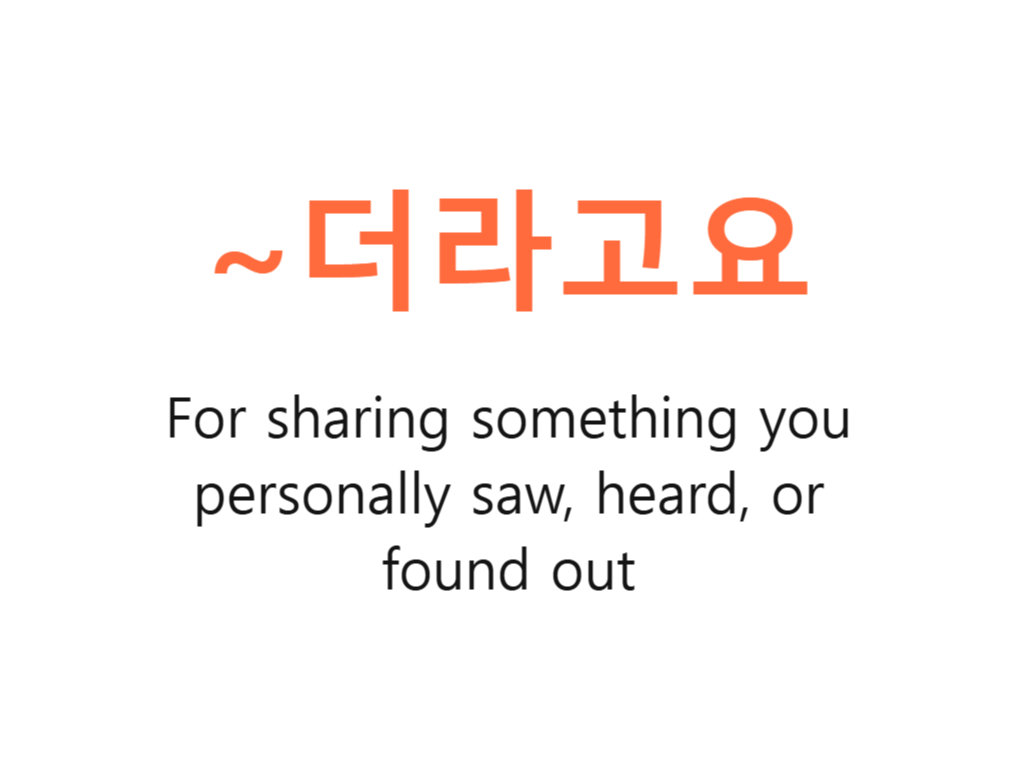
🇰🇷 What does ~더라고요 mean?
There isn't one perfect English translation for ~더라고요.
Depending on the situation, it can have meanings similar to:
- I noticed that...
- I found that...
- I realized that...
- It turned out that...
~더라고요와 정확히 일치하는 하나의 영어 표현은 없어요.
상황에 따라
“직접 보니 ~했다”,
“경험해 보니 ~했다”,
“알고 보니 ~했다”
정도의 느낌으로 이해하면 쉬워요.
The important point is personal experience.
You aren't simply stating a fact.
You're sharing something that you personally experienced or noticed.
가장 중요한 포인트는 직접 경험했다는 것이에요.
단순히 어떤 사실을 전달하는 것이 아니라,
내가 직접 경험하거나 관찰해서 알게 된 것을 상대방에게 이야기하는 느낌이 들어 있어요.
🍽️ Example 1
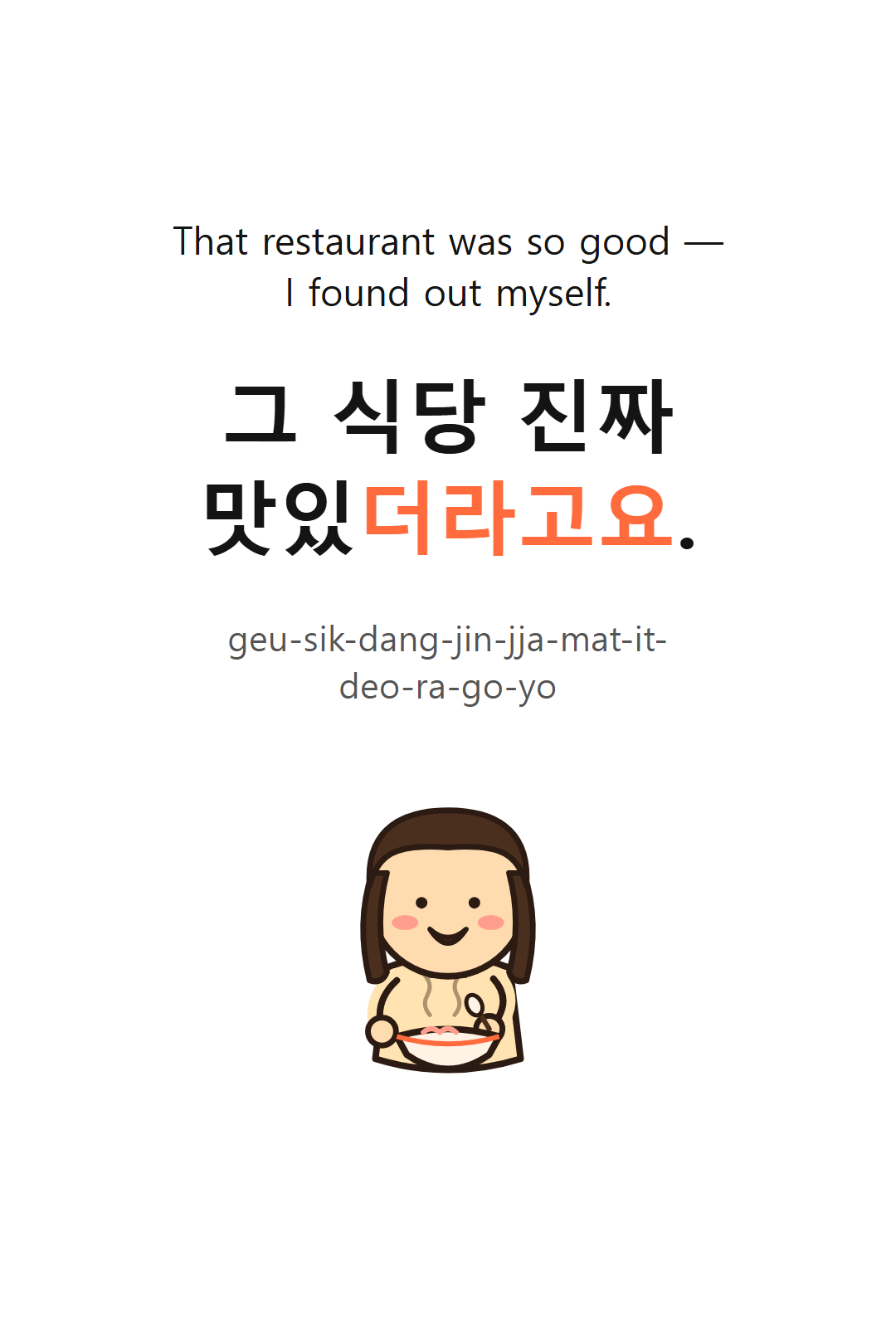
그 식당 진짜 맛있더라고요.
That restaurant was really good — I found out myself when I went there.
Imagine that you actually visited a restaurant and tried the food.
Afterward, you tell your friend:
“그 식당 진짜 맛있더라고요.”
직접 그 식당에 가서 음식을 먹어본 뒤 친구에게 이야기한다고 생각해 보세요.
“그 식당 진짜 맛있더라고요.”
단순히 “그 식당 맛있어요”라고 말하는 것보다
“내가 직접 가서 먹어봤는데 정말 맛있었어”라는 경험의 느낌이 들어가요.
🌧️ Example 2
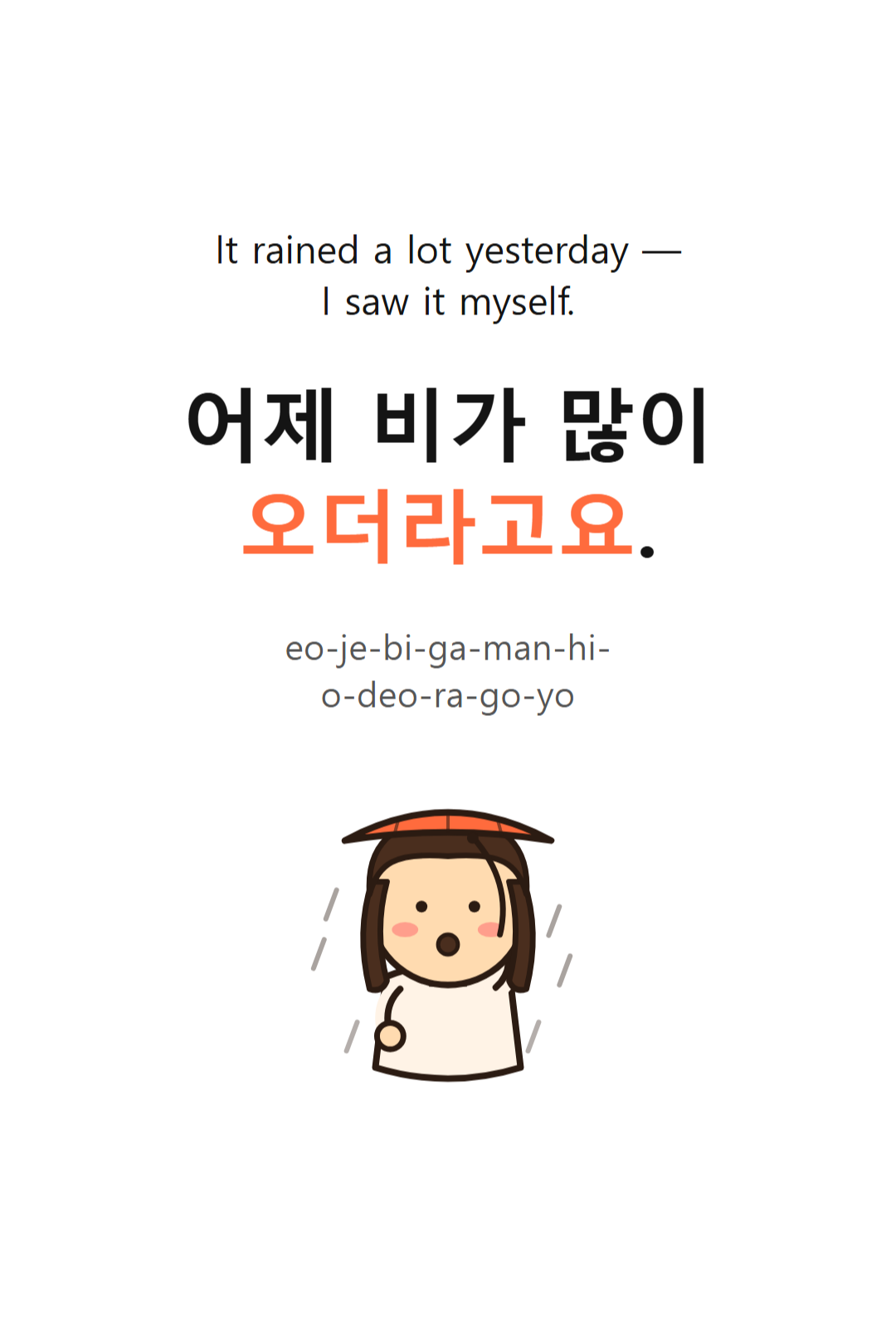
어제 비가 많이 오더라고요.
It rained a lot yesterday — I saw it myself.
Maybe you looked outside yesterday or went outside and saw that it was raining heavily.
Then you can say:
“어제 비가 많이 오더라고요.”
어제 직접 밖을 보거나 외출했는데 비가 많이 오는 것을 봤다면 이렇게 말할 수 있어요.
“어제 비가 많이 오더라고요.”
내가 직접 본 상황을 떠올리면서 이야기하는 표현이에요.
👩 Example 3
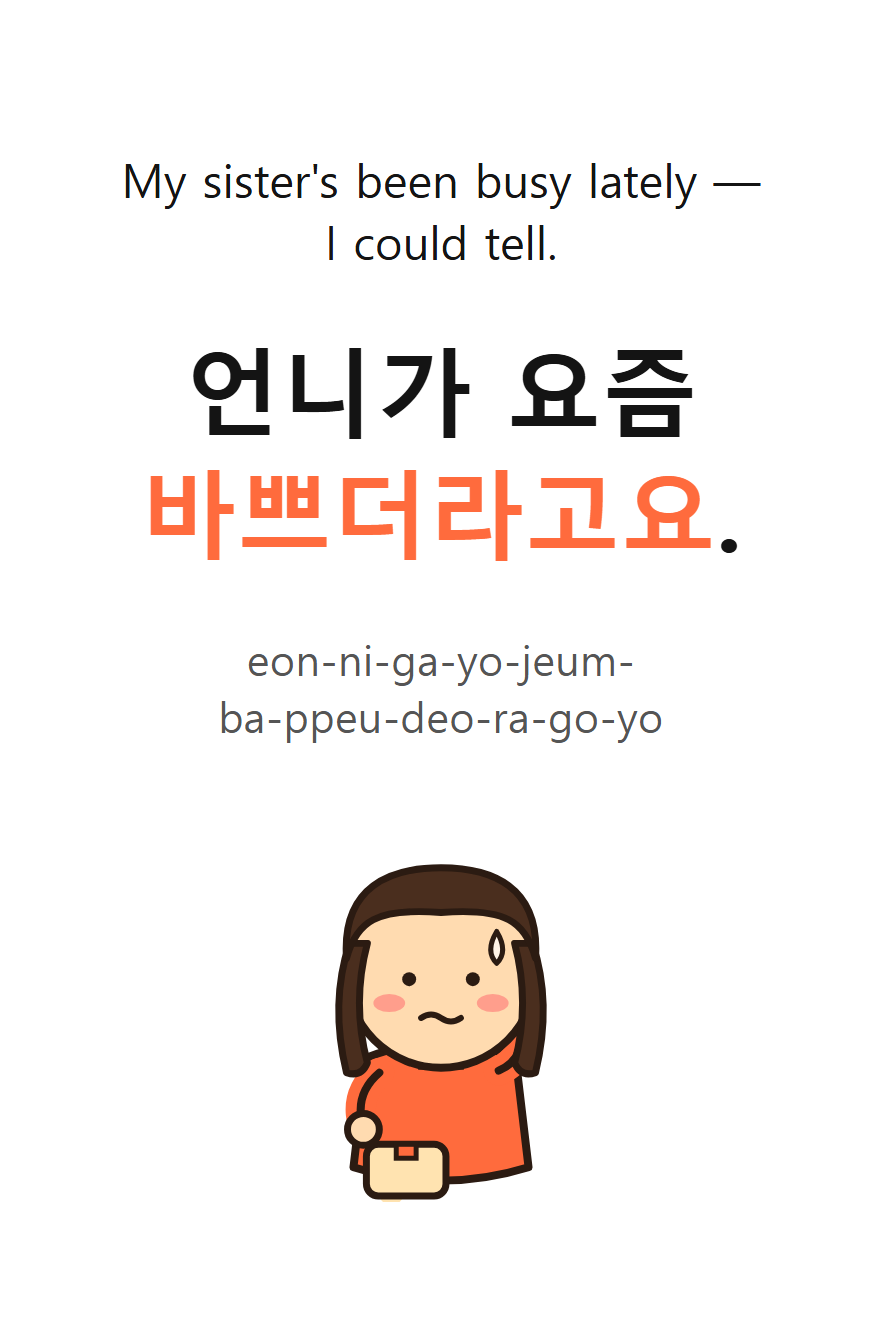
언니가 요즘 바쁘더라고요.
My sister's been busy lately — I could tell from seeing her.
Maybe you met your sister recently and noticed that she seemed very busy.
You can tell someone:
“언니가 요즘 바쁘더라고요.”
최근에 언니를 만나거나 지켜보면서 많이 바빠 보인다는 것을 알게 되었다면 이렇게 말할 수 있어요.
“언니가 요즘 바쁘더라고요.”
여기에서도 내가 직접 보고 느낀 경험이 포함되어 있어요.
💡 Compare These Two Sentences
그 식당 진짜 맛있어요.
→ That restaurant is really good.
그 식당 진짜 맛있더라고요.
→ I tried it, and it was really good.
Can you feel the difference?
The first sentence simply describes the restaurant.
The second sentence gives the feeling of:
“I went there myself, tried it, and discovered that it was really good.”
두 문장의 차이가 느껴지나요?
맛있어요는 단순히 맛있다는 사실을 말하지만,
맛있더라고요라고 하면
“내가 직접 먹어봤는데 정말 맛있었어”라는 경험이 자연스럽게 포함돼요.
That's why ~더라고요 sounds very natural when Koreans talk about restaurants, travel, people, movies, weather, and everyday experiences.
그래서 한국인들은 음식, 여행, 사람, 영화, 날씨 등 자신의 경험을 이야기할 때 ~더라고요를 정말 자주 사용해요.
🗣️ Practice Real Korean
Try saying these sentences out loud.
그 식당 진짜 맛있더라고요.
That restaurant was really good.
어제 비가 많이 오더라고요.
It rained a lot yesterday.
언니가 요즘 바쁘더라고요.
My sister's been busy lately.
First, say each sentence slowly.
Then try saying it again at a natural Korean speaking speed.
처음에는 천천히 따라 말해 보세요.
익숙해지면 한국인이 실제로 말하는 것처럼 자연스러운 속도로 다시 한번 말해 보세요.
Listening and repeating short sentences like these is a great way to make Korean grammar feel natural instead of just memorizing rules.
짧은 문장을 반복해서 듣고 따라 말하면 문법 규칙만 외우는 것보다 실제 대화에서 훨씬 자연스럽게 사용할 수 있어요.
✨ Today's Korean
~더라고요
👉 Used when sharing something you personally saw, heard, experienced, or discovered.
👉 직접 보고, 듣고, 경험하면서 알게 된 사실을 이야기할 때 사용하는 표현
Next time you experience something interesting in Korea, try telling someone about it using ~더라고요! 🇰🇷
다음에 새로운 음식이나 장소를 직접 경험했다면 ~더라고요를 사용해서 한국어로 이야기해 보세요!
Learn real Korean through everyday life with Sunny in Korea. 🇰🇷


