
When you speak Korean, you often want to say something like, “It’s good, but…”, “It’s cheap, but…”, or “It’s fun, but…”.
한국어로 대화하다 보면 “좋기는 한데…”, “싸기는 한데…”, “재미있기는 한데…”처럼 앞의 내용을 인정하면서 다른 의견을 덧붙이고 싶을 때가 있어요.
Koreans use a very natural expression for this:
한국인들은 이럴 때 정말 자연스럽게 사용하는 표현이 있어요.
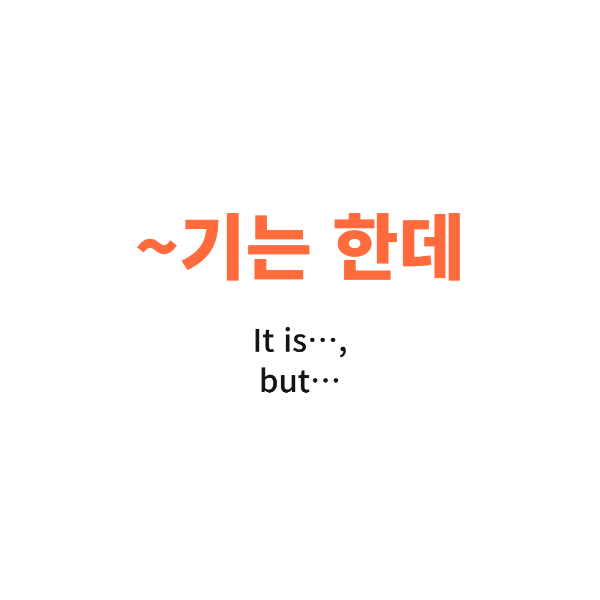
~기는 한데
It has a feeling similar to:
영어로는 다음과 비슷한 느낌이에요.
“It is…, but…”
“It’s true that…, but…”
Today, let’s learn how Koreans use ~기는 한데 in real conversations.
오늘은 실제 한국어 대화에서 ~기는 한데를 어떻게 사용하는지 알아볼게요.
---
🗣️ What does ~기는 한데 mean?
~기는 한데 is used when you first acknowledge that something is true, but then add a different opinion, problem, or downside.
~기는 한데는 어떤 사실을 먼저 인정한 다음, 그 뒤에 다른 의견이나 아쉬운 점, 반대되는 내용을 덧붙일 때 사용하는 표현이에요.
For example:
예를 들어 볼게요.
맛있기는 한데 너무 매워요.
It’s tasty, but it’s too spicy.
The speaker agrees that the food is tasty.
말하는 사람은 먼저 음식이 맛있다는 사실을 인정해요.
But there’s one problem: it’s too spicy!
하지만 한 가지 아쉬운 점이 있죠. 너무 맵다는 것!
That contrast is exactly where ~기는 한데sounds natural.
이렇게 앞뒤 내용이 대비될 때 ~기는 한데를 사용하면 아주 자연스러워요.
---
🌶️ Example 1: 맛있기는 한데 너무 매워요
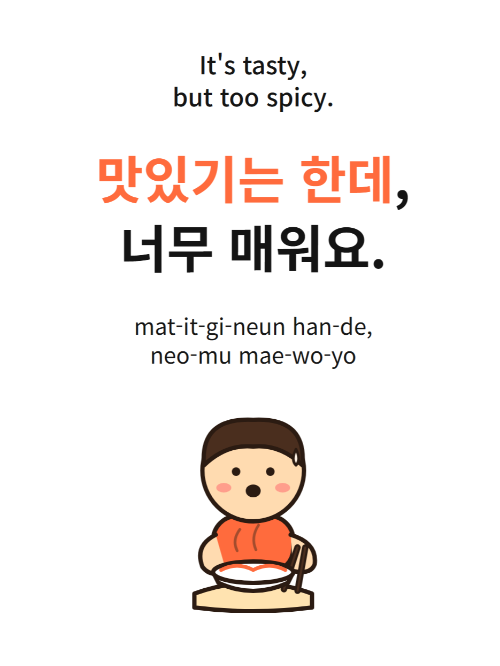
맛있기는 한데 너무 매워요.
It’s tasty, but it’s too spicy.
맛있다 → 맛있기는 한데
Here, you’re saying:
이 문장은 이런 느낌이에요.
“Yes, it IS tasty… but it’s too spicy.”
맛있는 건 맞지만, 너무 매워서 조금 아쉽다는 의미예요.
This is a very useful sentence when talking about Korean food!
한국 음식의 맛을 이야기할 때도 정말 활용하기 좋은 표현이에요.
---
🛍️ Example 2: 싸기는 한데 품질이 별로예요
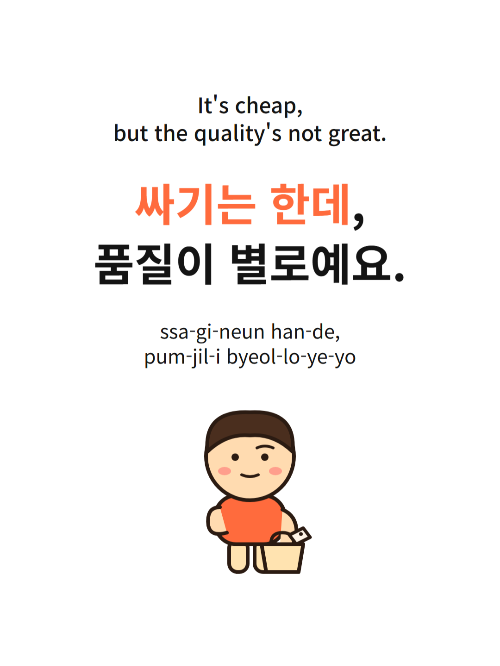
싸기는 한데 품질이 별로예요.
It’s cheap, but the quality’s not great.
싸다 → 싸기는 한데
The low price is a good thing, but there is a downside: the quality isn’t very good.
가격이 저렴하다는 점은 인정하지만, 대신 품질은 좋지 않다는 아쉬운 점을 이야기하고 있어요.
You can use this pattern naturally when talking about products, clothes, restaurants, hotels, and many other things.
제품이나 옷, 식당, 호텔 등 무언가를 평가할 때도 자연스럽게 사용할 수 있어요.
---
🎬 Example 3: 재미있기는 한데 너무 길어요
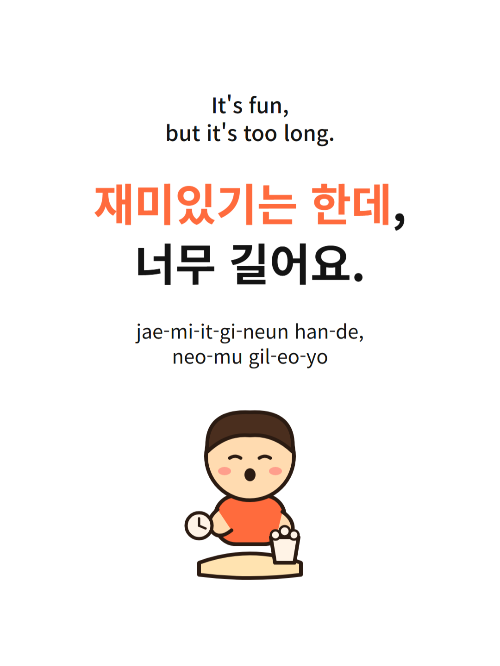
재미있기는 한데 너무 길어요.
It’s fun, but it’s too long.
재미있다 → 재미있기는 한데
Imagine your friend asks you:
친구가 이렇게 물어봤다고 생각해 볼까요?
“그 영화 어땠어요?”
“How was the movie?”
You could answer:
이렇게 대답할 수 있어요.
“재미있기는 한데 너무 길어요.”
“It’s fun, but it’s too long.”
You’re not saying the movie is bad. You’re saying it was fun, but there was one thing you didn’t like about it.
영화가 재미없었다는 뜻은 아니에요. 재미있다는 것은 인정하지만 **너무 길었다는 아쉬운 점**을 함께 말하는 거예요.
---
✏️ How to Make ~기는 한데
For descriptive verbs and verbs, you can attach -기는 한데 to the stem.
형용사나 동사의 어간 뒤에 -기는 한데를 붙여 사용할 수 있어요.
맛있다 → 맛있기는 한데
tasty → It is tasty, but…
싸다 → 싸기는 한데
cheap → It is cheap, but…
재미있다 → 재미있기는 한데
fun → It is fun, but…
가다 → 가기는 한데
go → I am going, but…
For example:
예를 들면,
가기는 한데 오래 있지는 않을 거예요.
I’m going, but I probably won’t stay long.
---
💡 Real Korean Tip
You may already know ~지만, which also means but.
이미 ~지만이라는 문법을 알고 있는 분도 있을 거예요. 이것도 영어의 “but”과 비슷하게 사용해요.
맛있지만 너무 매워요.
It’s tasty, but it’s too spicy.
맛있기는 한데 너무 매워요.
It IS tasty, but it’s too spicy.
Both are correct, but ~기는 한데 puts more emphasis on acknowledging the first point before adding a contrasting thought.
두 문장 모두 자연스럽지만 ~기는 한데는 앞의 내용을 그렇기는 해 / 그건 맞아”라고 일단 인정하는 느낌이 조금 더 강해요.
That’s why you’ll hear this pattern often when Koreans give opinions or evaluations in everyday conversations.
그래서 한국인들이 일상 대화에서 자신의 의견이나 평가를 말할 때 자주 들을 수 있는 표현이에요.
---

🇰🇷 Learn Real Korean with Sunny
Textbook Korean is important, but learning the expressions Koreans actually use in everyday conversations can make your Korean sound much more natural.
교과서에서 배우는 한국어도 중요하지만, 실제 한국인이 일상에서 사용하는 표현을 함께 익히면 훨씬 자연스러운 한국어를 말할 수 있어요.
Follow Sunny in Korea for more real Korean expressions, Korean food, culture, and everyday life in Korea!
앞으로도 Sunny in Korea에서 실제 한국인이 사용하는 표현과 한국 음식, 문화, 일상을 함께 소개할게요.
See you in the next Korean lesson! 🇰🇷
다음 한국어 표현에서 만나요!
https://youtube.com/shorts/lrUR6ZNNWWY?si=wjNBBBjRUzSQjDWc
'📚 Korean Grammar' 카테고리의 다른 글
| When Koreans guess something based on what they see or notice, they often use “~나 봐요.” (0) | 2026.08.27 |
|---|---|
| What Does ~더라고요 Mean? 🇰🇷 | Real Korean Grammar #4 (0) | 2026.08.20 |
| Why Do Koreans Trail Off? 🇰🇷 Learn ~는데요 in Real Korean (0) | 2026.08.18 |
| 🇰🇷 Korean Grammar: ~잖아요 | How Koreans Say “You Know…, Right?” (0) | 2026.08.15 |
| What Does ~거든요 Mean? | Learn Real Korean Expressions 🇰🇷 (0) | 2026.08.15 |


